Why Foundries Delivers Consistency
Inside a Casting Foundry: The Core of Metal Manufacturing
Within a casting foundry, operations take place that are essential to the manufacturing of metals. Industrial furnaces convert alloys into molten states, while skilled laborers manage detailed casting molds. Automated systems serve a critical function, enhancing efficiency and sustainability. Still, the sector faces significant hurdles that could shape its trajectory ahead. Examining these factors uncovers more than mere manufacturing processes; it highlights a complex interplay of established practices and modern advancements. What the future holds for this fundamental industry?
The Essentials of Metal Casting
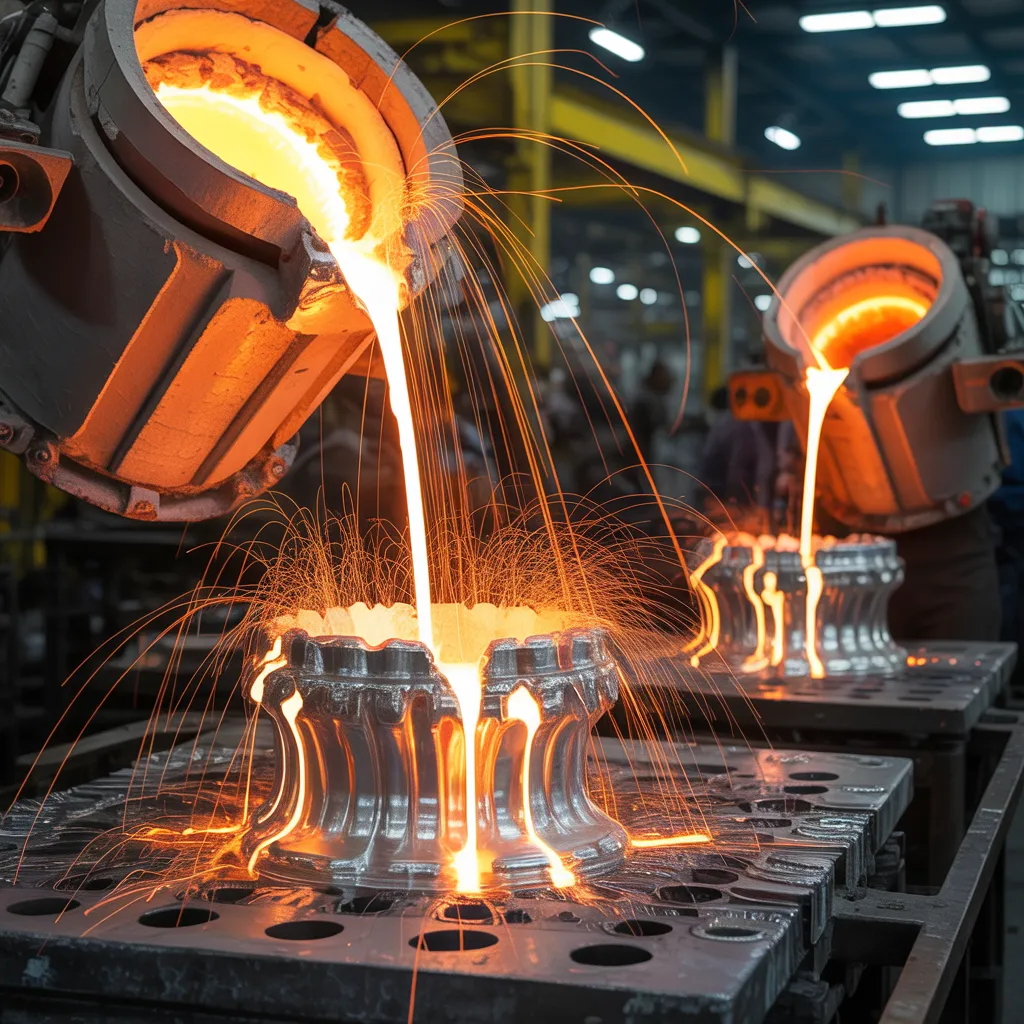
Metal casting serves as a foundational process in industrial production, changing molten metal into solid components. This method has been used for centuries, permitting artisans and manufacturers to craft components with intricate shapes and precise dimensions. The technique commences with identifying suitable metal alloys, which are subsequently melted at elevated temperatures.
After melting, the metal is cast into molds engineered to produce the final product. These casting molds can be made from various materials, including ceramic, sand, and metal, according to the production volume and required specifications.
Once the metal has cooled and solidified, the mold is removed, uncovering the cast object. This method provides considerable advantages, such as minimized material waste and the ability to produce elaborate shapes that would be challenging to achieve through other manufacturing techniques. Understanding these basics is crucial for appreciating the importance of metal casting in today's industry.
Essential Processes in Metal Casting: Melting, Molding, and Refinement
The process of metal casting encompasses three essential stages: melting, molding, view details and refinement. Initially, raw metal is subjected to intense furnace heat until it reaches a molten state, facilitating greater workability. This melting process is fundamental, as it directly influences the quality of the end result.
Next, the molten metal is poured into casting molds, which form it into defined shapes. The type of molding material—including options such as ceramic, sand, or metal—affects the casting's surface finish and dimensional accuracy.
Ultimately, refinement encompasses allowing the cast metal to cool and solidify, accompanied by processes such as heat treatment, machining, or polishing to enhance its mechanical properties. This phase ensures the final product adheres to exacting quality benchmarks and detailed specifications. All of these procedures are critical, supporting the overall productivity and quality of metal casting, ultimately leading to premium-grade components across multiple industries.
Progress in the Contemporary Foundry Industry
As the foundry field progresses, new developments are transforming conventional methods, boosting performance and eco-conscious operations. Developments in modern technology, including 3D printing, are revolutionizing mold production, facilitating sophisticated designs and faster turnaround times. This approach not only reduces material waste but also supports tailored solutions, meeting specific client demands more effectively.
Moreover, the adoption of automated robotics systems streamlines processes, improving operational efficiency and lowering human error rates. Advanced manufacturing solutions, including Internet of Things sensors, provide real-time data analytics, enabling accurate operational monitoring and predictive maintenance.
Moreover, green practices and materials are becoming more prevalent, decreasing the impact on the environment of foundry operations. The adoption of repurposed metals and energy-efficient smelting systems exemplifies a movement towards more sustainable practices, supporting global sustainability goals. These innovations combined help shape a stronger and more sustainable foundry sector, ready to navigate future obstacles while fulfilling the changing demands of the industry.
What Difficulties Are Casting Foundries Confronted With?
What challenges do casting foundries face in an constantly changing industry? One significant challenge is the instability in raw material expenses, which can significantly strain production budgets. Furthermore, environmental regulations are getting progressively stricter, forcing foundries to implement cleaner technologies to reduce emissions and waste. This shift requires significant capital investment, which can strain smaller operators.
Furthermore, competition from international producers often leads to pricing challenges, creating obstacles for local foundries to preserve financial viability. Foundries must also contend with adjusting to rapid technological advancements, including automated systems and digital integration, which necessitate sustained training efforts and financial investment.
Finally, supply chain challenges, exacerbated by global events, pose a continual risk, impacting the prompt delivery of parts and raw materials. In combination, these difficulties necessitate foundries to remain flexible and inventive to thrive in a challenging industry landscape.
The Role of Skilled Labor in Casting Foundries
Although automation and technology persistently transform the manufacturing landscape, skilled labor remains a cornerstone of operations in casting foundries. The detailed demands of foundry work requires a depth of knowledge that automated systems cannot fully achieve. Skilled workers possess the expertise to evaluate detailed specifications, choose suitable alloys and compounds, and troubleshoot issues that arise during the production cycle. Their real-world knowledge is indispensable for ensuring quality control and precision, particularly in high-stakes projects that demand exact specifications.
Moreover, skilled workers play a vital role in overseeing and improving equipment, making certain that production flows smoothly and productively. As casting methods develop, these professionals are also responsible for adjusting and improving methods, integrating new technologies while retaining traditional craftsmanship. Across this progressive field, the partnership between qualified labor and technological innovation is fundamental for maintaining the standards and dependability that characterize thriving casting foundries.
Upcoming Trends in Casting: What Lies Ahead for the Industry?
New advancements in the casting industry are ready to redefine its trajectory, fueled by innovations in technology and shifting market requirements. Automation and artificial intelligence are continuously improving production workflows, boosting precision and minimizing workforce costs. In addition, the incorporation of 3D printing is transforming mold manufacturing, enabling advanced design possibilities and reduced lead times.
Sustainability is increasingly taking center stage as companies aim to minimize their environmental footprint. This encompasses the use of recycled materials and the adoption of energy-efficient processes across foundries. Furthermore, the rising demand for lightweight materials, notably in the automotive and aerospace fields, is spurring new innovations in alloy formulation.
The field is equally observing a transition toward digitalization, with IoT technologies enabling instantaneous tracking and anticipatory upkeep. As these advancements come together, the casting industry is likely to experience significant transformations, preparing itself to handle the complexities of a fast-shifting international market.
Frequently Asked Questions
What Kinds of Metals Are Typically Cast in Foundries?
Commonly cast metals in foundries include aluminum, iron, steel, bronze, and brass. Each metal possesses unique properties, rendering them ideal for a wide range of applications, from vehicle components to decorative objects, demonstrating the adaptability of casting processes.
What Are the Environmental Impacts of Metal Casting?
Metal casting operations impacts the environment through emissions, energy consumption, and waste generation. This process can lead to pollution of air and water, while also consuming considerable resources, prompting the need for sustainable practices and technologies in the sector.
What Safety Precautions Are Implemented for Foundry Workers?
Foundries employ various safety precautions, including safety equipment, ventilation setups, regular training sessions, and careful observance of established safety standards. These measures are designed to minimize hazards and guarantee a safe working environment for all employees.
How Are Casting Defects Identified and Corrected?
Casting defects are identified via visual inspections, dimensional checks, and non-destructive testing methods. Remediation includes adjusting processes, repairing defects, or re-casting as necessary to ensure quality and compliance with specifications.
What Is the Standard Production Timeline for a Casting?
A typical production timeline for a casting encompasses a number of stages: pattern creation, pouring, mold making, finishing, and cooling. This process generally spans from a couple of days to multiple weeks, based on complexity and production volume.